
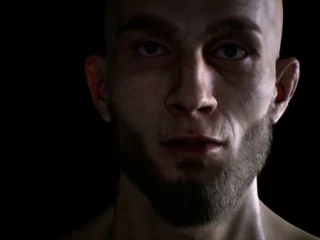
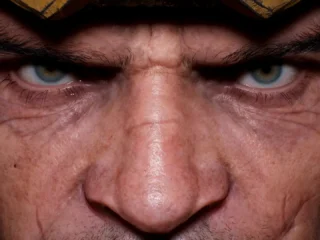
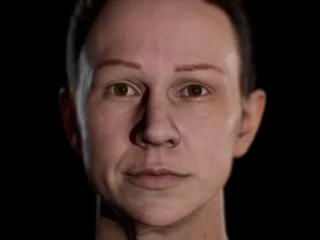


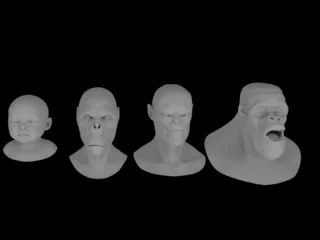

Questions, answered.
What studios ask us most about RigX, its pipeline fit and how to evaluate it. Don’t see your question? Ask our team.
The basics
What is RigX?
RigX is a real-time character deformation technology designed to expand what’s possible with digital characters while maintaining high runtime performance. It introduces a solver-driven deformation layer into the character pipeline, enabling complex facial expressions, dynamic muscle movement and detailed character deformation without relying exclusively on traditional rigging techniques.
RigX is designed for game development, digital doubles, virtual production and other applications that require high-quality character deformation at scale.
How does RigX work?
RigX operates as a deformation layer within the character pipeline, working alongside existing character rigs and animation systems. Instead of relying entirely on large collections of blend shapes and corrective shapes, it uses a solver-driven approach to calculate complex deformations in real time.
This allows teams to create more flexible character systems while keeping control over deformation behavior, performance and integration into their existing workflows.
How does RigX compare to traditional blend shapes and joint-based deformation?
Traditional character pipelines often rely on combinations of joints, blend shapes, corrective shapes and deformation systems to achieve the desired result. As character complexity increases, managing these systems becomes increasingly time-consuming and resource-intensive.
RigX introduces a solver-driven alternative that can produce complex deformations without requiring every movement or expression to be represented by a separate corrective shape. It offers a different approach to character deformation, with the potential to simplify complex setups and improve runtime efficiency.
Pipeline & integration
Does RigX work with existing character rigs?
Yes. RigX is designed to complement existing character rigs rather than require studios to rebuild their characters from scratch. It can be integrated into established workflows, so teams keep their existing animation systems while adding new deformation capabilities.
Specific integration requirements depend on the character setup, target application and intended use case. For custom GUI controls, the supported value range must be between -1 and 1, while joint rotations must be set to 0.
Which 3D applications and game engines does RigX support?
RigX combines a Maya-based workflow for character setup and deformation control with runtime technology designed for integration into real-time applications.
We are developing and validating integrations across game engines and production tools, including Unreal Engine and custom runtime environments. Available functionality varies by application and version.
Does RigX require a specific topology or skeleton?
No. RigX is designed to accommodate different character assets and production requirements rather than being tied to one predefined topology.
Can RigX be integrated into a proprietary engine or custom pipeline?
RigX is being developed with integration flexibility in mind. Alongside application-specific workflows, our runtime technology takes an API-oriented approach intended to support integration into custom software and proprietary engines.
Capabilities
Can RigX handle facial expressions and body deformation?
RigX supports fully customizable facial deformation, from FACS-based expression systems to emotion-driven, stylized, cartoon and entirely custom expressions. FACS is a starting point, not a limitation: RigX can accommodate any expression system or artistic direction, so studios define exactly the facial behavior their characters require.
The same approach extends to full-body deformation, from anatomically driven muscle movement and biomechanical response to stylized, exaggerated or entirely custom body behavior: realistic muscle contraction, subtle tissue movement or expressive body language.
Can RigX work with scanned characters and digital doubles?
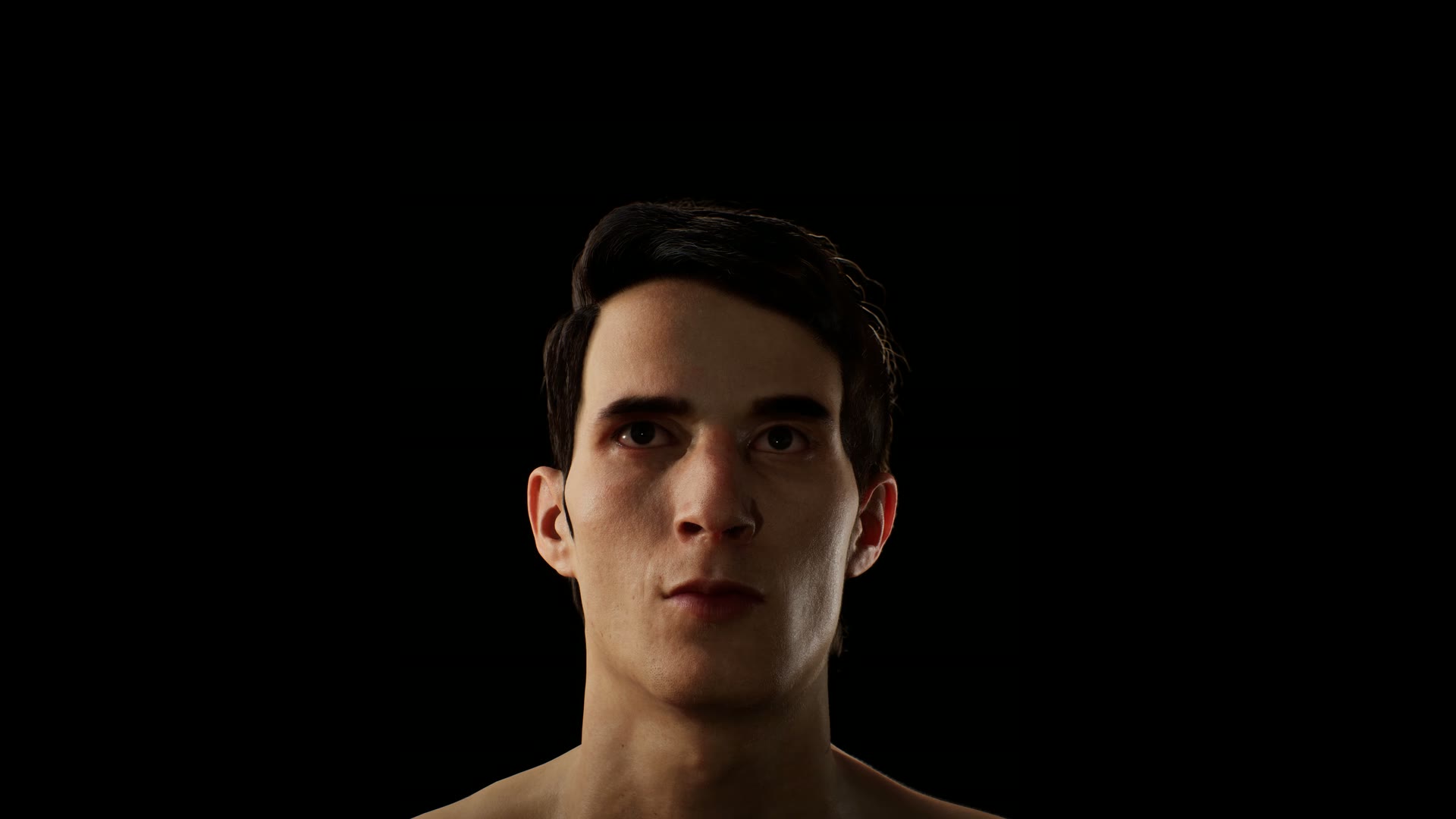
Yes. RigX is designed to support high-fidelity digital-double workflows, including characters derived from 3D scans and other high-resolution source material. It can build complex facial deformation systems from scanned data, supporting a wide range of expressions and combinations.
Can RigX be used for crowds and large numbers of characters?
RigX is designed to address the performance challenges of complex characters and large numbers of animated characters. Our work includes optimizing lightweight character deformation for crowd scenarios.
Current capabilities and performance depend on the character configuration.
Performance & evaluation
What performance can we expect from RigX?
Technology usually advances through incremental improvements, but occasionally a fundamentally different approach changes what’s possible. RigX was built to challenge the existing trade-offs between deformation quality, complexity and performance.
Rather than take our word for it, test RigX with your own characters and workflows, and see the difference for yourself.
Can we test RigX using our own characters?
Yes. We encourage studios to evaluate RigX with their own characters and production requirements. An evaluation lets your team assess deformation quality, runtime performance and integration requirements on assets that reflect your actual pipeline.
Still have a question?
Our pipeline team will answer it, ideally with RigX running on your own character.
Book a technical demo Or contact us